
The Thomson Research Fellowship
The Thomson Research Fellowship supports student and faculty research collaboration on field-based or laboratory research in the Biological Sciences Department. Dr. M. Scott Thomson taught in the Biological Sciences Department for 22 years. During that time he mentored many students in his lab including 11 master’s students. He believed that one of the strongest features of the education UW-Parkside offers in biology is the opportunity for students to collaborate directly with faculty in their research. He observed many times how these opportunities could motivate students to succeed and find their future paths in graduate school, medical and health careers, and in industry. He thought that offering a stipend to students for this work, and money for research supplies could make the opportunity to participate accessible to more students. This is what prompted the Thomsons’ gift in 2015 establishing the fellowships.
The Fellowship is open to all students who are declared majors within the Department of Biological Sciences (undergraduate or graduate students), and awarded in Fall and Spring semesters.
Award recipients are required to actively carry out independent research in collaboration with and under the supervision of a biological sciences faculty or academic staff member over two semesters (or a summer plus academic semester).
Recipients receive a $1,500 research stipend in addition to $1000 provided through the research advisor for research supplies and support.
Students receiving the award are also required to present their research in collaboration with their research advisor as part of a departmental research symposium near the end of the project, and they are required provide documentation of any additional presentations of this research (published papers, conference talks, or outreach events).
Thomson Fellowship Recipients
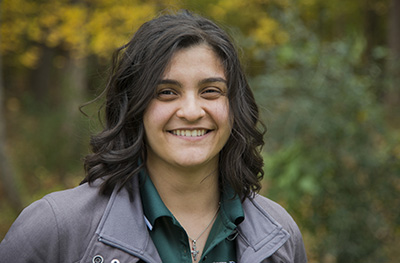
BIANCA RUFFOLO
B.S. in Molecular Biology and Bioinformatics | May 2019
“The Thomson Fellowship was extremely beneficial when applying to MD/PhD programs. I was asked to write and talk about my experiences with this research, and conveying what I have done and what I learned most certainly played a role in my acceptance to the University of Cincinnati MD/PhD program. I am very grateful for that.”
BRITTANY DOBROWSKI
B.S. In Molecular Biology and Bioinformatics | May 2019
“The Thomson Fellowship has given me the opportunity to explore many well-used molecular biology techniques. It has given me the chance to do biochemical work and give me a taste at the type of research I would like to pursue in the future. …Because of the Thomson Fellowship I now would like to pursue a dual degree program in which I will work towards a DVM/PhD program.”
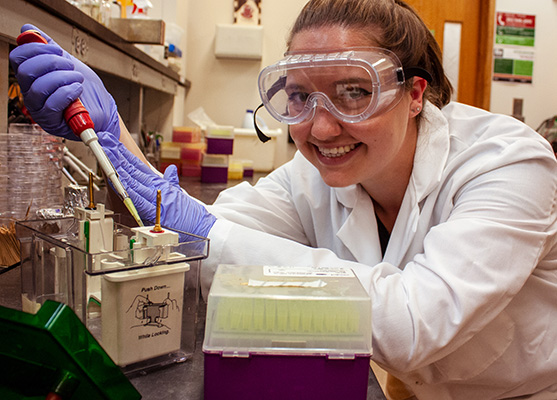
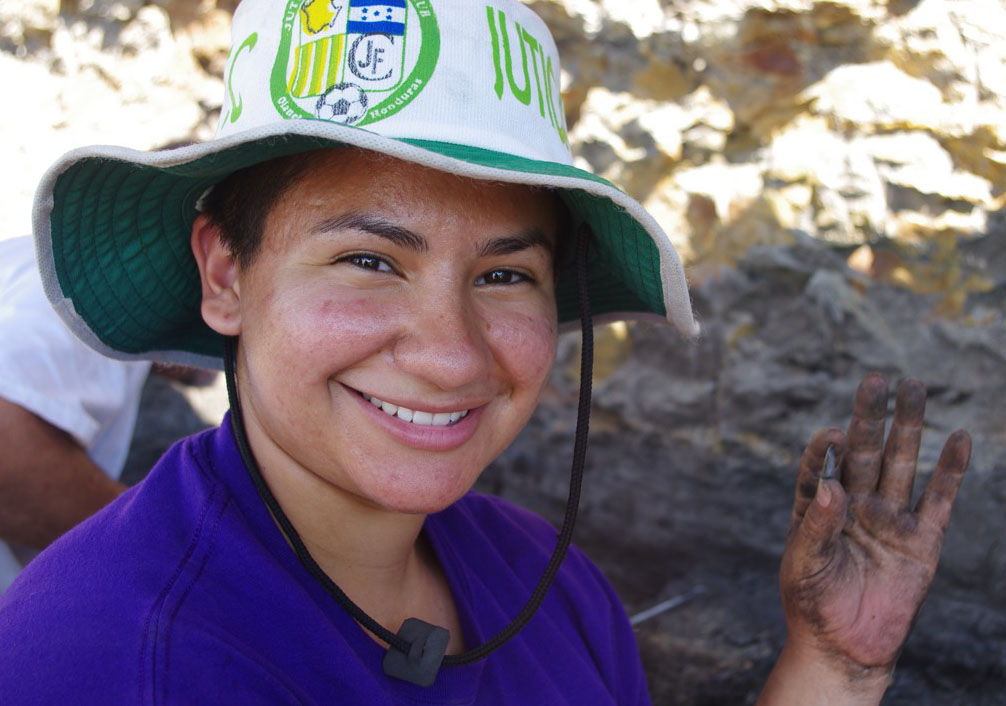
MELISSA ACOSTA
B.S. in Biological Sciences | May 2019
“The Thomson Fellowship helped me start a Paleontology research project that changed my career trajectory. It has been the bridge that allowed me to continue my research, gain more knowledge on how to conduct research, as well as preparing me for graduate school. Having had the experience of a Thomson Fellow, my post-graduate plans include obtaining a MPH (Masters in Public Health) with a focus on Community Health where I will be able to use my research abilities obtained in my undergraduate years.”
THOMSON FELLOWS
More than 60 students have received fellowships since 2015.
Summer 2015 | Fall 2015
Julie Kessler | Dr. Greg Richards
Title: The effects of the stringent regulators DksA and ppGpp on the glucose-phosphate stress response in E. coli
Valerie Riehl | Dr. David Higgs
Title: Transcript analysis of alternative spliced CrXrn1-GFP reporter genes in Chlamydomonas reinhardtii
Fall 2015 | Spring 2016
Sylvia Burns | Dr. Traci Lee
Title: Swapping promoters for Met31 and Met32 does not entirely explain their functional differences
Michelle Pruett | Dr. Daphne Pham
Title: Evaluating the effects of the mosquito ribonucleotide reductase enzyme activity
Fall 2017 | Spring 2018
Malory Mueller | Dr. Daphne Pham
Title: Expression and purification of the R1 and R2 subunits of RNR and optimization of RNR activities
Emily Walters | Dr. Traci Lee
Title: Re-processing of raw RNA-Seq data and RT-qPCR to measure transcript levels in Met4 target genes in promoter swap strains
Fall 2019 | Spring 2020
Wesley Cruz | Dr. Traci Lee
Title: The role of the promoter in expression and regulation of MET32 in Saccharomyces cerevisiae
Nolan Ryan | Dr. Traci Lee
Title: Characterizing the expression of the Met4 transcriptional complex upon swapping the promoters of transcriptional family members MET31 and MET32
Summer 2015 | Fall 2015
Danny Wilson | Dr. David Rogers
Title: The effects of land-use: comparing vegetative compositions between old growth and secondary growth forest communities.
Fall 2015 | Spring 2016
Liv Gripko | Dr. Jessica Orlofske
Title: Invertebrate delineation of Samuel Myers Park in Racine.
Hailey Henck | Dr. Natalia Taft
Title: Climbing sucks: do fin rays help?
Summer 2016 | Fall 2016
Michael Molinaro | Dr. Natalia Taft
Title: Functional morphology of the fin rays of Acipenser fulvescens.
Fall 2016 | Spring 2017
Alejandro Quiroz | Dr. Fabian Preuss
Title: Rescuing the food hemostat – applying a digest resistant maltodextrin in order to counter the effects of a high fat diet using a C57BL/6J mouse model
Nora Willkomm | Dr. Jessica Orlofske
Title: Morphometric analysis of riverine dragonflies.
Danielle Tesar | Dr. Jessica Orlofske
Title: Environmental variability regulates dragonfly emergence from Wisconsin rivers.
Fall 2017 | Spring 2018
Melissa Acosta | Dr. Chris Noto
Title: Using turtle shell preservation to understand depositional conditions at the Arlington Archosaur Site in Texas
Waynette McCracken | Dr. Jessica Orlofske
Title: Inferring food-webs from avian parasites
Fall 2017 | Spring 2018
Josie Ackmann | Biological Sciences major | Dr. Jessica Orlofske
Title: The response of lentic aquatic invertebrates assemblages to simulated climate change.
Kimberley Mvetimbo Tambo | Dr. Natalia Taft
Title: Comparative analysis of the material properties of the fin rays of the Coho Salmon
Fall 2018 | Spring 2019
Josie Ackmann | Dr. Jessica Orlofske
Title: The response of lentic aquatic invertebrates assemblages to simulated climate change.
Kimberley Mvetimbo Tambo | Dr. Natalia Taft
Title: Comparative analysis of the material properties of the fin rays of the Coho Salmon.
Fall 2021 | Spring 2022
Madelynn Sinclair | Dr. Greg Mayer
Title: Quantitative genetics of morphological characteristics of sea snakes
Fall 2022 | Spring 2023
Proxson Chiryan | Dr. Fabian Preuss
Title: Using Cri-Lox System to study the BAML1 gene involved with circadian clock in mice
Lamija Coric | Dr. Greg Richards
Title: Characterizing the effect of nucleoside metabolism on E. coli bacterial stress levels during glucose-phosphate stress
Jennifer Destiny-Ann Lavine | Dr. Favian Preuss
Title: Investigation of mice with mutations in circadian rhythm genes that are on high fat diets
Fall 2023 | Spring 2024
Mohammad Asjed | Dr. Fabian Preuss
Title: Looking for links between circadian rhythm disruption and early onset Parkinsons
Caleb Neill | Dr. Chris Noto (Summer-Fall 2023)
Title: Creating 3D models of Protohadros forelimb mobility via ROM analysis and cartilage reconstruction
Fall 2024 | Spring 2025
Connor Alton | Dr. Jessica Orlofske (Summer-Fall 2024)
Title: Parasites of gamefish in the Pike Lake Chain
Anneta Barzano | Dr. Fabian Preuss
Title: Finding relation between circadian systems and microbiome growth with age
Sam Peterson | Dr. Jessica Orlofske
Title: Isopods in space
Snigdha Reddy | Dr. Rob Barber (Fall 2024)
Title: Characterization of short chain fatty acid kinase in Roseburia intestinalis.
Nicholas Winter | Dr. David Higgs
Title: Investigating the effects of CRISPR-Cas9 induced mutations and lipid production in Chlamydomonas reinhardtii
Fall 2025 | Spring 2026
Izabella Demarest | Dr. Fabian Preuss (Spring-Summer 2026)
Title: Breeding colon specific conditional knockout mice to investigate circadian and microbiome signaling in gut homeostasis
Jonathan Jung | Dr. Jessica Orlofske (Fall 2025)
Title: Evaluating habitat viability targeting water composition for the Hine’s emerald dragonfly (Somatochlora hineana) in southeastern Wisconsin
Molly Shower | Dr. Jessica Orlofske (Spring-Summer 2026)
Title: We’ll all float on: characterizing impacts of the sink/float cycle on entomological evidence in aquatic decomposition
Holly Skinner | Dr. Fabian Preuss
Title: Longitudinal effects of diets on the gut microbiome
Fall 2015 | Spring 2016
Rebekah Mokry | Dr. Traci Lee
Title: Purification of GST and his tagged Met 4 complex proteins
Joseph Rouse | Dr. Greg Richards
Title: Characterizing the effects of fructose metabolism on glucose-phosphate stress
Summer 2016 | Fall 2016
Emily-Lou LaMartina | Dr. Jessica Orlofske
Title: Development of a non-lethal molecular approach to evaluate population structure and dispersal for rare and endangered riverine dragonflies (Odonata gomphidae)
Fall 2016 | Spring 2017
Nicholas Bielski | Dr. Jessica Orlofske
Title: Sublethal effects of climate change on aquatic invertebrate assemblages
Daniela Castellanos | Dr. David Higgs
Title: Screening and analysis of new Chlamydomonas reinhardtii Xrn mutants
Jessica Castillo Venegas | Dr. Rob Barber
Title: Characterization of a butyrate kinase from Desulfovibrio vulgaris str. Hildenborough
Brandi Cobe | Dr. Greg Richards
Title: Connections of glucose-phosphate stress response to the stringent response in Escherichia coli.
Nicholas Malcolm III | Dr. Daphne Pham
Title: Establishing an assay for ribonucleotide reductase assay
Joseph Rouse | Dr. Greg Richards
Title: Characterizing novel connections between the glucose-phosphate stress response and the stringent response in nutrient starvation
Fall 2017 | Spring 2018
Megan Augustine | Molecular Biology and Bioinformatics major | Dr. David Higgs
Title: Molecular analysis of Chlamydomonas reinhardtii 5’-3’ exoribonuclease mutants
Maxwell Bachochin | Dr. Rob Barber
Title: Characterization of a butyrate kinase variant BVU_1920
Salena Wegmet | Dr. Daphne Pham
Title: Incorporating Aedes aegypti RNR gene into a CRISPR vector
Fall 2018 | Spring 2019
Emily Campbell | Dr. Greg Richards
Title: Examining the effect of glucose-phosphate stress response regulators on the Escherichia coli stringent response to nutrient starvation
Brittany Dobrowski | Dr. Rob Barber
Title: Understanding short chain fatty acid kinase enzymology
Bianca Ruffolo | Dr. Greg Richards
Title: Characterization of Escherichia coli genes involved alternative carbon source metabolism that affect growth during glucose-phosphate stress
Jennifer Shaw | Dr. Greg Richards
Title: Characterizing the effect of sugar phosphotransferase system members on the response to glucose-phosphate stress in Escherichia coli
Fall 2019 | Spring 2020
Ariana Hernandez | Dr. Jessica Orlofske
Title: Molecular phylogeny (evolutionary development) of a potential new species of Mexican woody bamboo using DNA sequencing
Rachel Mutchler | Dr. Jessica Orlofske
Title: Understanding metabolic changes by environmental stressors on Damselfly (Coenagrionidae) larvae
Fall 2021 | Spring 2022
Quinn Allbee | Dr. Rob Barber
Title: NEV-BLAST computer application to study protein evolution
Keysury Corro-Trujillo | Dr. Jessica Orlofske
Title: The effects of chloride on aquatic invertebrate organisms
Fall 2022 | Spring 2023
Christiane Laskowski | Dr. David Higgs
Title: Analysis of gene expression in mutant strain of alga Chlamydomonas reinhardtii under low-nitrogen conditions
Fall 2025 | Spring 2026
Elaina Hintze | Dr. Greg Richards
Title: Pathways to survival: characterizing alternative carbon source metabolism in Escherichia coli during glucose-phosphate stress
Fall 2020 | Spring 2021
Lauren Prochniak | Dr. Rob Barber
Title: Characterizing a proposed butyrate kinase from Bacteroides thetaiotaomicron
Fall 2021 | Spring 2022
Heather Emery | Dr. Greg Richards
Title: Elucidating the role of the pentose phosphate pathway in the glucose-phosphate stress response of Escherichia coli
Jared Mayrand | Dr. David Higgs
Title: Molecular genetic characterization of a mutant algal strain tolerant to low nitrogen
Fall 2023 | Spring 2024
Catherine Brooks | Dr. Greg Richards
Title: Nucleosides function as alternative carbon sources, aiding in the recovery of Escherichia coli under conditions of glucose-phosphate stress
Farron Bussian | Dr. Jessica Orlofske
Title: An assessment of integrity of the WAV citizen monitoring biotic index in Wisconsin
Skylar Johnston | Dr. Greg Mayer (Spring-Summer 2024)
Title: Morphometrics, systemics and distribution of the Puerto Rican woodpecker (Melanerpes portoricensis)
Fall 2024 | Spring 2025
Kelsey Moen | Dr. Greg Richards
Title: The effect of the pentose phosphate pathway and related carbon source metabolism on the growth of E. coli during glucose-phosphate stress
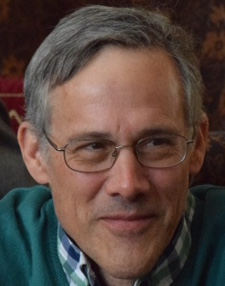
DR. MELVIN SCOTT THOMSON
Dr. Melvin Scott Thomson (“Scott”) joined the Department of Biological Sciences at the University of Wisconsin-Parkside as an Assistant Professor, in 1992. Here he studied Red Flour Beetle genetics that involved numerous undergraduate and graduate students. Scott retired from the University of Wisconsin-Parkside in May 2014, and continued with his research.
As a reflection of his unwavering and generous support for students and research, Scott and his wife, Alice, established the Scott and Alice Thomson Research Fellowship, in Spring 2015. Since its start, this competitive research program has funded dozens of students as Thomson Fellows, who have gone on to successful graduate, medical, research, and industry careers.
Dr. Melvin Scott Thomson (“Scott”) earned a Bachelor of Arts degree in Biology and Chemistry from Middlebury College in 1976, a Masters of Science in Entomology at the University of Georgia in 1981, and a doctorate in Entomology from North Carolina State University in 1986. Scott continued his training as a Postdoctoral Associate first at Duke University, 1987-1989, and then at Kansas State University, 1989-1992, in the laboratory of Dr. Richard Beeman of the USDA Agricultural Research Service Stored Product Insect Research Unit, Manhattan, Kansas. With his credentialed education and research experiences, Scott used his genetics, molecular, and entomology expertise to study genetic traits in the Red Flour Beetle (Tribolium castaneum) and investigated the complex genetic interactions of Medea, the H gene, and environmental factors that control, in part, beetle fertility and development.
In 1992 Scott joined the Department of Biological Sciences at the University of Wisconsin-Parkside as an Assistant Professor. Here he continued to study Red Flour Beetle genetics that involved numerous undergraduate and graduate students. Scott was promoted to the rank of Associate Professor with tenure in 1999. In 2003 Scott became the Chair for the Department of Biological Sciences, a position he held for two terms.
Scott taught a wide range of courses over his career including the introductory Biosciences, General Genetics, Invertebrate Zoology, and the Medical and Forensics Entomology courses. Through these courses and academic programs, Scott taught and impacted thousands of students. Scott mentored countless undergraduate and graduate students through field entomology field projects and collaborative research studies on the genetics of Red Flour Beetles. His laboratory made important and novel discoveries about the genetic basis of reproductive incompatibility in insects. Many of these students went on to a wide range of careers in science.
Scott retired from the University of Wisconsin-Parkside in May 2014 and was awarded emeritus faculty status. After retiring he spent much time with his family and friends. Scott’s passion for research and Red Flour Beetle genetics persisted, and after retiring he continued with his research projects.
A reflection of his unwavering and generous support for students and research from Scott and his wife, Alice, is their establishment and gifting of the Scott and Alice Thomson Research Fellowship, Spring 2015. Since its start, this competitive research program has funded 36 successful students as Thomson Fellows, many of whom have gone on to successful graduate, medical, research, and industry careers.
In March 2016 Scott lost his battle with cancer. The Scott and Alice Thomson Research Fellowship is one of the many ways Scott’s life, career, and lifelong support of academics and student research continues to grow and positively impact others after his death.
MAKE AN IMPACT
UW-Parkside invites you to join in advancing student faculty research in the biological sciences through a gift to the Thomson Research Fellowship.