Natural History Collections
The University of Wisconsin-Parkside hosts teaching and research collections that encompass botany, invertebrate zoology, vertebrate zoology, geology, and paleontology specimens. These materials are used for courses in Biological Sciences and Geosciences as well as individual faculty research across multiple disciplines.
THE BOTANY COLLECTION
The botany collection contains approximately 1,750 specimens. Wisconsin vascular plant species comprise the majority of the collection, particularly species found in southeastern Wisconsin. The botany collection includes materials collected by UW-Parkside students, faculty, and other donations.
THE INVERTEBRATE ZOOLOGY COLLECTION
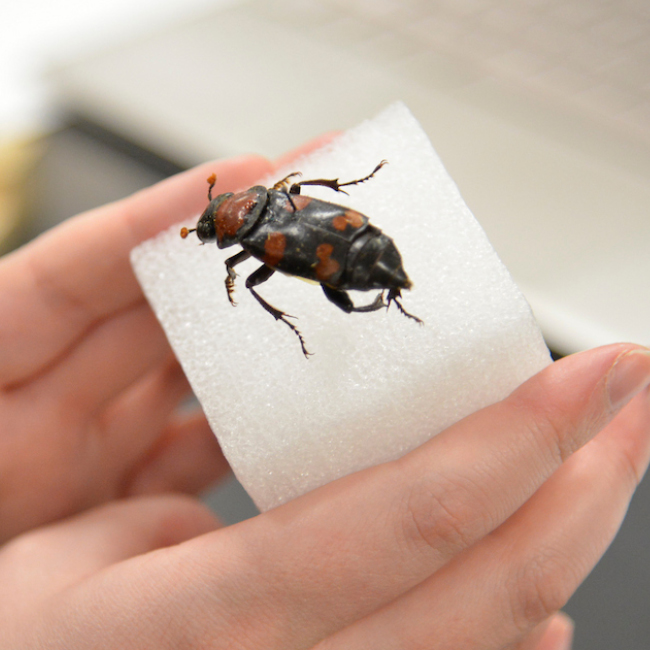
The invertebrate zoology collection contains over 30,000 specimens of terrestrial and aquatic invertebrates. The collection contains primarily arthropods (e.g., insects and crustaceans), with smaller quantities of molluscs (e.g., snails, freshwater mussels), annelids (e.g., segmented worms), as well as parasitic nematodes (e.g., round worms) and platyhelminths (e.g., flatworms). Most of the invertebrate zoology specimens were sourced from Wisconsin; however, the collection does include material from other states as well as several international locations. Freshwater aquatic invertebrates are special focus of the invertebrate zoology collection, including an extensive collection of specimens from the Miramichi River in New Brunswick, Canada.
UW-Parkside is a contributor to a collaborative effort to create accessible records for our freshwater invertebrate specimens through the BenthicNet project supported by the Freshwater Collaborative of Wisconsin.
Insects and other invertebrates are the most abundant and varied residents of freshwater habitats. Their presence and abundance are used as powerful tools to assess water quality, a practice called biomonitoring. The work of Wisconsin biologist William Hilsenhoff was fundamental to the application of benthic macroinvertebrates for biomonitoring. The legacy of those experts includes the techniques as well as the specimens they preserved in museum collections, including the Hilsenhoff collection. Access to these irreplaceable materials and their data are now the necessary fuel for future innovation. BenthicNet forms a network of specialists across Wisconsin that will expand access to these historically significant specimens while simultaneously training the next generation of experts. BenthicNet also creates opportunities to directly support statewide monitoring objectives of regulators and their partners.
THE VERTEBRATE ZOOLOGY COLLECTION
The vertebrate zoology collection comprises about 1,200 specimens, including taxidermy, study skins, skulls, bones, fluid-preserved material, nests, and other artifacts. Materials represent taxa common to Wisconsin and the upper Midwest United States.
The geology and paleontology collections include roughly 1,500 specimens with materials collected from across Wisconsin, other areas of the United States and beyond. A key focus of the geology and paleontology collection is the driftless area of Wisconsin, with material from Baraboo, Wisconsin.